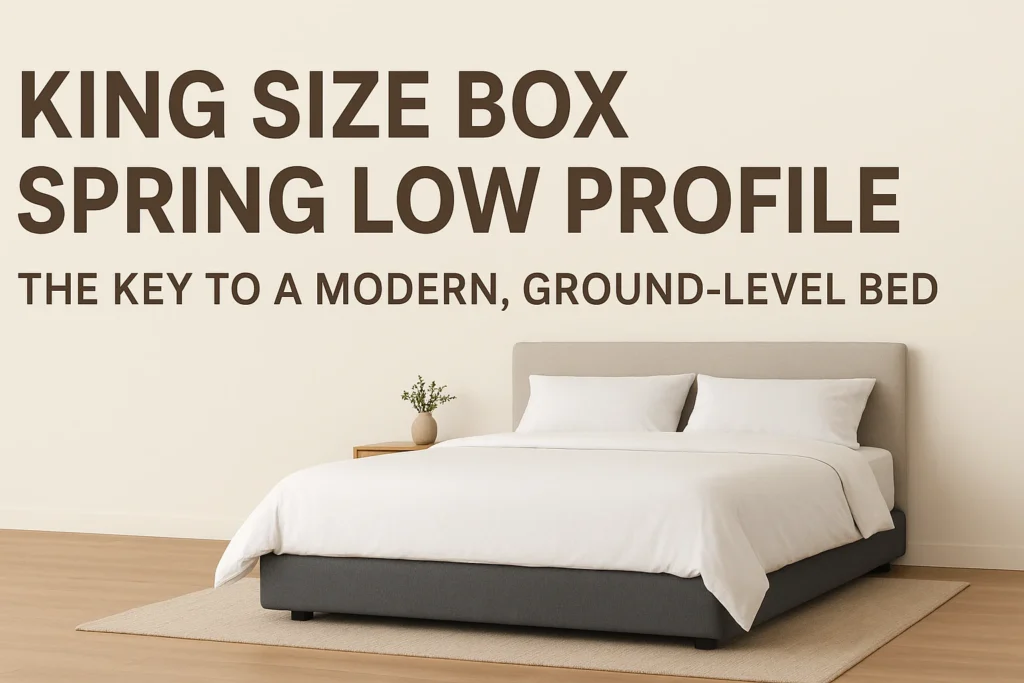
Imagine stepping into your bedroom and seeing a bed that hugs the floor like a cozy invitation. No bulky height stealing the show. That’s the magic of a king size box spring low profile. It turns your sleep space into a modern haven. You get that sleek look without losing support for your mattress.
Standard box springs often add too much lift. They make beds feel tall and awkward in today’s homes. A low profile king box spring fixes that. It drops the height while keeping things sturdy. Plus, it pairs well with fresh mattress styles. In this guide, we’ll break down why you need one. We’ll cover sizes, perks, and smart buys.
Understanding Low Profile vs. Standard King Box Springs
What Defines “king size box spring low profile”? Dimensions and Measurements
A low profile king box spring stands at just 5 to 7 inches tall. Compare that to a regular one at 9 inches or higher. That small drop changes everything.
Your bed’s total height shrinks by several inches. It sits closer to the floor. This works great with platform frames or slim headboards. No more climbing up like it’s a bunk bed. The king size stays wide at 76 by 80 inches. But the low height makes it feel lighter in the room.
Think about your space. A standard spring pushes the mattress top to 25 inches or more from the floor. Low profile keeps it around 18 to 20 inches. That’s easier on the eyes and your back.
Construction Differences: Support Systems and Materials
Low profile springs use smart builds to hold up without extra height. They often have tight coils or solid wood bases. Reinforced edges stop sagging over time.
Traditional ones rely on thick wood frames that add bulk. Low profile shifts to lighter setups. Some use metal slats for bounce without the weight. Others go for foam edges that hug the mattress tight.
You won’t notice the difference in feel. A good low profile king box spring supports up to 500 pounds per side. It matches what a standard one does. Just in a sleeker package.
Compatibility Check: Mattress Types and Warranty Implications
Not every mattress loves a low base. Memory foam and hybrids shine with low profile king box springs. They need even support to avoid lumps. Innerspring mattresses work too, but check the coils match.
Skip thick pillow-tops if your base is super low. They might compress wrong. Hybrids blend coils and foam for the best fit.
Always peek at your mattress warranty. Some brands say the foundation can’t exceed 7 inches. Others demand center support for kings. Break that rule, and you void coverage. Call the maker or read the fine print. It’s worth the extra step for peace of mind.
Top Benefits of Choosing a King Size Low Profile Box Spring
Aesthetic Advantage: Creating a Modern, Grounded Look
- Low profile foundations make your bed look grounded and chic. The mattress sits low, like it’s floating just above the floor. This fits minimalist vibes in small or big rooms.
- Your bedroom feels open. No tall frame blocking the view. Pair it with clean lines, and you’ve got that hotel spa feel at home.
- In tight spaces, it tricks the eye. The room looks bigger. Less clutter from high beds. Designers love this for contemporary setups.
Accessibility and Practicality for All Ages
- Getting in and out gets simple with a low profile king box spring. No high step-up needed. It’s a win for kids, short folks, or anyone with sore joints.
- Older adults pick these for easy access. Trends show more people want beds under 20 inches total height. It helps with daily life, like grabbing the remote without a stretch.
- Think about mornings. You slide out smooth. No wobbles or strains. That small height cut brings big comfort gains.
Enhanced Stability and Reduced Motion Transfer
- A lower bed means better balance. The center of gravity stays close to the floor. For a king size, that cuts shakes when you roll over.
- Motion transfer drops too. Your partner’s tosses won’t wake you as much. Compare a 3-inch metal frame to a 6-inch spring. The spring adds cushion without tipping risks.
- Physics backs this up. Lower setups grip the floor better. You feel secure, even on thick carpets. It’s like driving a low sports car—steady and smooth.
Navigating king size box spring low profile Types and Configurations
Split vs. Unibody Low Profile Foundations
- Split low profile king box springs come in two parts. Each half fits the 38 by 80-inch side. Easy to carry up stairs or through doors.
- Unibody ones are one piece. They’re rare for kings because of the size. But they assemble tight with no seams.
For moves, go split. Tip: Wrap each half in blankets. Slide them end-first around corners. Setup takes minutes—just align and lock. No tools often needed.
- Pros of split: Lighter pieces, simple install.
- Cons: Possible slight gap if not fitted right.
- Unibody perks: Seamless support, less wobble.
Pick based on your home layout.
Platform Bed Integration vs. Traditional Frame Use
Platform styles replace slats altogether. They sit flat on the floor or legs. Your low profile king box spring acts as the base—no frame required.
- Traditional ones slip into metal or wood rails. They add that classic lift, but keep it low.
- Adjustable bases can go low too. Raise the head for reading, but the frame stays slim. Great for health needs.
- Match your setup. Platforms save money on frames. Traditional fit old headboards.
Material Deep Dive: Wood, Steel, and Upholstered Finishes
Wood frames last long in low profile models. They handle weight well, up to 1,000 pounds total. Light oak or pine keeps it affordable.
- Steel options shine for strength. They resist rust with powder coats. Perfect for damp rooms.
- Upholstered covers hide the base. No bed skirt needed. Pick neutral fabrics to match sheets.
Each material suits different needs:
- Wood: Warm look, quiet sleep.
- Steel: Tough for active homes.
- Upholstered: Style boost, easy clean.
Check weight limits. Kings need solid builds for even support.
Measuring Your Space: Height Clearance and Frame Fit
Grab a tape measure first. Check from floor to headboard rail bottom. Your low profile king box spring must slide under—aim for 1-inch clearance.
For the frame, eye the center beam. Kings over 76 inches wide need it strong. Low height means less room for error.
Test doorways too. Split designs help, but measure turns. Add mattress height to picture the full bed. You want 18 to 24 inches total for easy reach.
Durability vs. Cost: Finding the Right Value Proposition
King low profile box springs start at $150 for basics. Mid-range hits $300 with better springs. Premium upholstered ones top $500.
- Cheap ones might bend under heavy use. Look for steel rods or thick plywood. They hold modern mattresses that weigh 100 pounds plus.
- Warranties matter. Aim for 10 years on the frame. Read for defects coverage. Skip no-name brands—stick to trusted ones like Zinus or Leggett & Platt.
- A low profile choice ties into platform bed foundation king searches. You might need low height box spring add-ons like short legs.
- These bases pair with slim skirts or no skirts at all. Search for “king low profile foundation no box spring” if you want alternatives.
- Long-tail terms help you find deals. Think “affordable low profile king box spring for memory foam.” They lead to exact matches.
Conclusion: king size box spring low profile
A king size box spring low profile brings fresh style and real ease to your bedroom. It solves height woes while boosting access and stability. You get a modern setup that lasts.
From split designs to sturdy materials, options fit every home. Measure well, check warranties, and pick for value. Your mattress will thank you with better support.
Ready to upgrade? Hunt for that low profile king box spring today. It transforms sleep and your space. Sweet dreams await.