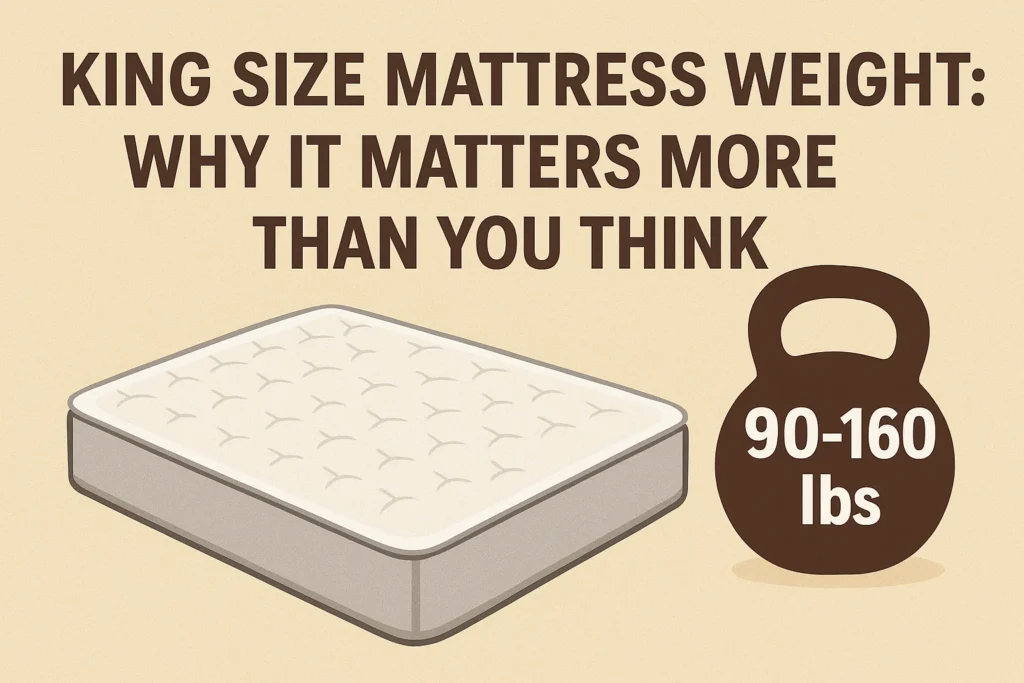
When most people shop for a king size mattress, the focus is usually on comfort, firmness, and price. I used to think the same-until the day I bought my first one. Carrying it up a narrow staircase with two friends, I quickly realized that king size mattress weight is not just a side detail. It can affect everything: moving, setup, and even how long your bed frame lasts.
In this guide, let’s take a closer look at the average weight of king mattresses by type, why it really matters, and some smart tips to handle them without breaking your back.
Average King Size Mattress Weight by Type
Not every king mattress weighs the same. The material and construction make all the difference:
| Mattress Type | Average Weight (King Size) | Quick Notes |
|---|---|---|
| Memory Foam | 90–125 lbs | Heavier when made with dense foam layers |
| Hybrid | 110–150 lbs | Coil + foam structure adds bulk |
| Innerspring | 70–100 lbs | Lightest, easiest to move |
| Latex | 120–160 lbs | Heaviest option, but very durable |
👉 Related Blog: Memory Foam vs Spring Mattress—Which One Is Better for a King Bed?
Why Mattress Weight Actually Matters
1. Moving and Setup
Have you ever tried moving a latex mattress by yourself? If yes, you know it feels like wrestling with a giant. Heavier mattresses can be tough to maneuver through doorways and staircases. If you move homes often, a lighter innerspring may be the more practical choice.
2. Bed Frame Support
Not all bed frames are created equal. Imagine placing a 150+ lb mattress plus your body weight on a weak frame—it’s a recipe for squeaks, sags, or worse, a collapse. For king sizes, sturdy frames with center support are always recommended.
3. Durability and Longevity
Here’s the upside: weight can sometimes mean quality. Heavier mattresses, like hybrids and latex, are built with more materials, which often makes them last longer. The trade-off? They can be harder to rotate or flip.
4. Delivery and Return Policies
Here’s something many buyers overlook: some mattress companies charge extra for heavy models, especially if they require white-glove delivery. Always double-check policies before hitting that “buy now” button.
Tips for Handling a Heavy King Mattress
- Use a Mattress Bag: Keeps it clean during moves.
- Never Move Alone: Team lift only—your back will thank you.
- Sliders or Straps: Make moving easier on hardwood or carpet.
- Consider Adjustable Bases: Designed to support extra weight safely.
👉 Related Blog: Do You Really Need a Box Spring for a King Size Mattress?
FAQs About King Size Mattress Weight
Q1. How much does a king mattress weigh on average?
Between 90–150 lbs, depending on the material and design.
Q2. Is a heavier mattress always better?
Not necessarily. Heavier mattresses often use denser, more durable materials, but weight alone isn’t a guarantee of comfort.
Q3. Can any bed frame hold a heavy mattress?
No. You’ll need a strong frame with proper center support—budget frames won’t cut it.
Q4. Does mattress weight affect comfort?
Weight itself doesn’t, but heavier mattresses like latex and hybrids usually offer better support and durability.
Final Thoughts
Understanding king size mattress weight is just as important as choosing the right firmness or material. The weight plays a hidden but important role in convenience, setup, and long-term durability. If you move frequently, an innerspring might be your best bet. But if you want something built to last, a heavier hybrid or latex mattress is worth the investment.
At the end of the day, the “best” mattress isn’t just the most comfortable—it’s the one that fits your lifestyle.
What’s your experience with mattress weight? Have you struggled with moving a heavy one, or do you prefer something lightweight? Share your story below!